
What is ideal BMI: Significance of BMI calculator
Over time, increasing awareness about the significance of a healthy weight has made it a serious concern for all. In such a situation, everything that is relevant or helpful in a weight loss plan is worthy of attention.
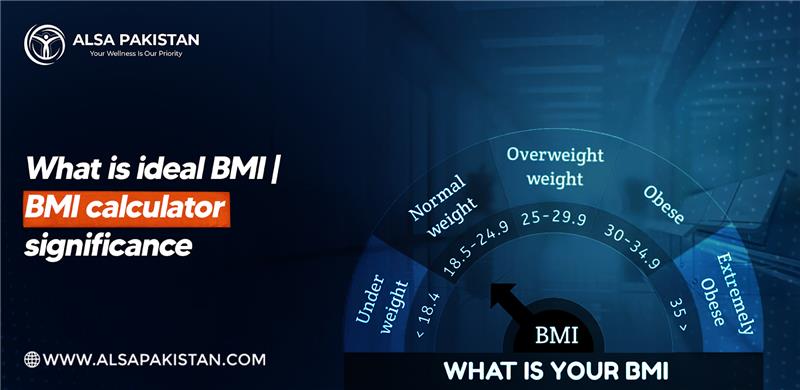
The body mass index or BMI. is an effective screening tool that determines the category of weight in which a person lies. The numerical value obtained classifies an individual as underweight, normal weight, overweight, or obese.
It is computed using a straightforward formula: weight in kilograms over the square of height in meters (BMI = weight (kg) / height (m²)). Although the public and medical experts find BMI to be a useful metric because of its simplicity, the idea of an ideal BMI is still not entirely clear.
People seem to be making hard efforts to achieve this ideal number as a symbol of health, fitness, or aesthetic balance. However, BMI alone cannot fully account for variations in body composition, muscle mass, age, sex, or ethnicity. Because of that, BMI's accuracy in determining people's overall health is a big question. Keep reading to have an insight into the BMI formula's operation, the significance of its ranges, and the variables that make it difficult to interpret a person's actual state of health.
How is BMI calculated, and why does it matter
The best thing about using body mass index is, it is simpler to use. The only requirement is to measure the exact height in meters and weight in kilograms. For this purpose, one only needs a simple weight machine and a meter rule. The standard formula is:
BMI=Weight in kilograms(Height in meters)2
The answer you get can then be compared to standard BMI categories.
The availability of numerous online BMI calculators is a great convenience for the public. Everyone can get an instant calculation of their BMI by simply entering their weight and height. In addition, any individual can find BMI charts on various websites with a little effort, which visually show where their BMI falls within the standard categories. These tools are user-friendly, free, and accessible on both computers and mobile devices. Hence, make it easy for anyone to track and understand their BMI.
Understanding the standard BMI ranges for adults.
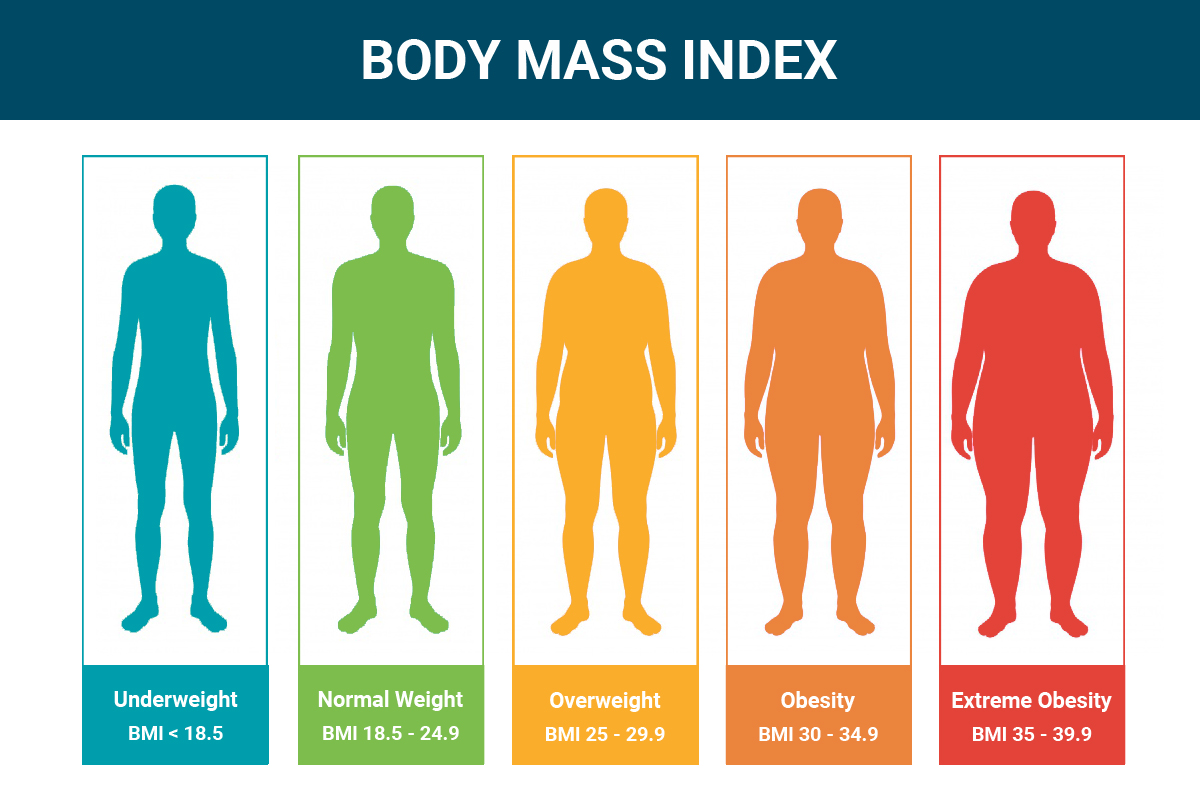
Body Mass Index is a simpler tool that gives a useful starting point for assessment of potential health risks associated with weight. The categories of the BMI scale give health professionals an idea of different levels of weight. Below are the four major classes
Underweight (Below 18.5):
The borderline of the first category is 18.5. People with a BMI value under this number are considered underweight. Inadequate muscular mass or body fat may be the cause of this. Sometimes it might result in immune system weakness, dietary deficits, and other health issues.
Healthy Weight (18.5–24.9):
This range is considered ideal for most adults. It generally shows a good balance between body fat and muscle. People in this category are very often at a lower risk of weight-related diseases.
Overweight (25–29.9):
It is within this range that one is considered to have excess body weight. At the same time, it does not always mean poor health. However, the majority in this group are at high risk for conditions such as high blood pressure, type 2 diabetes, and heart disease. Hence, there is a great need to identify the reason to manage health status well.
Obese (30–39.9):
Folks with a BMI value of 30 – 39.9 are obese. Frequently, it is a higher amount of body fat leading to this reading. It can greatly increase the risk of diseases, such as diabetes and some cancers. People of this category essentially necessitate lifestyle modification and medical attention.
Be in a healthy weight range with Dr Tahir Yunus
BMI for children and Young people:
The scenario is opposite when it comes to children and adolescents, because the growth rate is generally very high in this age group. This age bracket is associated with profound body composition changes. Hence, normal BMI ranges for adults are not applicable to young individuals. Instead, their BMI must be interpreted by health professionals using age and gender-specific charts. It assists in identifying any growth or weight concerns more appropriately.
Age and Gender Matter:
Children’s body fat naturally varies due to growth. In addition, boys and girls develop differently. A fixed cut-off for BMI cannot capture these variations, which is why adult cut-offs are not applicable to youths.
Use of Percentiles:
The way to compare a child's BMI to that of people of the same age and sex is through using BMI percentiles. The child's BMI percentiles show the relationship between a child's BMI and other children of similar ages and sexes. Case in point, a BMI at the 85th percentile means the child has a higher BMI than 85% of those tested within the sample. These percentiles characterize children's weight as underweight, overweight, obese, or healthy weight in a more accurate way when compared against adult cutoffs.
Significance of consulting a Health Professional:
A knowledgeable medical practitioner or pediatrician can review the BMI of children accurately. He assesses results with the concept that growth patterns differ greatly. Instead of depending only on BMI figures, they can evaluate general health, growth patterns, and offer recommendations according to the child's requirements.
The Limitations of BMI: When the Number Lies
Muscle Density vs. Fat — The Athlete Paradox
Muscle mass comes with a significant variation in people with different levels of physical activity or profession. Athletes and highly active people frequently have higher muscle mass. It simply means that their muscles are heavier and denser than fat. With this effect, despite having minimal body fat and being in good overall health, their BMI results may declare them as overweight or obese. This highlights how BMI may not accurately represent true fitness or body composition.
Pregnancy Considerations
Pregnancy is a transformative journey that brings both excitement and change. Expecting mothers can anticipate a range of physical, emotional, and hormonal adjustments. This is why eating patterns, physical work and other activities change significantly. Plus, the weight of the fetus also adds to the mother’s BMI results. Hence, a higher BMI value during this critical phase is not a true measure of a woman’s overall health.
Other factors that health professionals consider
Clinical judgment of an accomplished professional includes various elements. Aside from BMI, they focus on Body fat, waist-to-hip ratio, and waist circumference to assess general health. Moreover, they take into account a person's distribution of fat and risk of metabolic diseases. They also track blood pressure, cholesterol, blood sugar, and lifestyle behaviors in regard to diet, exercise, smoking, alcohol, sleep, and stress. Family medical history matters in addition to physical fitness.
Ethnic group considerations and health risks
Indeed, body mass index gives referral values that can demonstrate a healthy weight range. However, that is not all. Many folks undergo various medical conditions like hypertension, even with a lower BMI value. Particularly those of Asian origin. In simple words, normal BMI at standard guidelines may still carry significant health risks. Thus, in some cases the conventional definition of healthy weight can be misleading. Here is a short list of potential risks
- Ethnicity Shapes Risk: People of Asian ancestry can show metabolic risk at lower BMIs because of differences in visceral fat, insulin sensitivity, and body fat distribution. Diet and lifestyle are one major factor contributing to this. Even a BMI of 23 or 24, still considered "normal" in many countries, is enough to put many Asians at risk of diabetes and heart disease.
- Personalized Health Monitoring: Medical professionals are now supporting ethnic specific screening and weight management guidelines to screen at-risk populations at lower BMI levels.
- Implications for weight-loss clinics: Clinics should consider these ethnic differences in making treatment recommendations, determining treatment goals and monitoring rather than relying solely on BMI cut-offs.
Beyond the calculator: Key factors for weight Management
Health is more than just a single number. BMI cannot determine true well-being. It comprises a pool of elements that reflect how your body is functioning as a whole. Thus, it requires looking at multiple indicators and lifestyle habits. To have a better assessment of your overall health and improve it, following parameters need critical consideration.
Waist circumference: Waistline tells much about a person’s health status. Visceral fat is a kind of fat that surrounds our bellies. It is one of the main drivers of a thicker waist. This fat increases the risk for heart disease, diabetes, and other metabolic problems. Maintaining a check on waist size, even if your weight seems normal, can help you detect hidden health risks.
Blood pressure: Your blood pressure is the second important consideration. High blood pressure causes strain upon the heart, arteries, and blood vessels, with raised heart attack or stroke risk. A close watch on it allows management of lifestyle or medication.
Cholesterol Level: A balanced amount of cholesterol greatly increases the expectancy for a heart that is healthy. A person is supposed to have a healthier heart if his LDL cholesterol equals his HDL cholesterol levels. This balance lowers the risk of cardiovascular disease and indicates when someone might need to change their diet or get medical care.
Lifestyle Factors: The foods someone eats and the amount someone moves relate quite a bit to general health. If you are desirous to have a healthy weight, consuming a balanced diet and getting busy in physical activity is a must. Collectively, it promotes good mental and physical health across the span of time.
To have a more complete picture of health, above mentioned elements are of great help and enable an individual to make better decisions.
Final Thoughts
To sum up, due to various social media platforms the majority population has gained awareness about the significance of maintaining a healthy weight. To get first-hand information, BMI is a sophisticated screening tool that can demonstrate the weight category in which you fall.
However, considering it as a final measure of your health is totally wrong. It is highly beneficial because it can categorize a person as underweight, normal, overweight or obese. This information can give a basis to proceed in the right direction for general well-being.
However, BMI is not a 100% diagnosis for being healthy or unhealthy. It is best to go to the doctor or healthcare provider such as Dr. Tahir Yunus at ALSA Pakistan for the final verdict after doing the initial assessment for your weight.
